- Film
- Dracula Sucks
- Director
- Philip (Phillip) Marshak
- Starring
- Jamie Gillis, Annette Haven, Kay Parker, Serena, John Holmes, Seka
- Year
- 1978
- Country
- USA
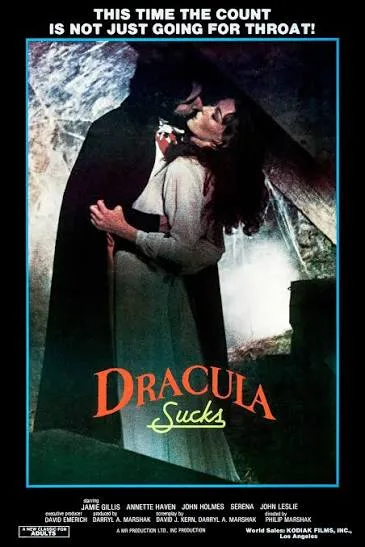
In 1978, when the American adult film industry was experimenting with theatrical ambitions and increasingly elaborate productions, director Philip Marshak attempted something unusual; he brought Bram Stoker's legendary vampire into the world of hardcore pornography.
The result was Dracula Sucks, a film that combined the gothic atmosphere of Universal's classic horror cinema with the sexual freedom, excesses, and contradictions of the Golden Age of Porn.
Starring Jamie Gillis as Count Dracula, Annette Haven as Mina, John Leslie as Dr. Arthur Seward, and Kay Parker as Dr. Sybil Seward, the production assembled an extraordinary roster of adult performers. Adding to its peculiar appeal was Reggie Nalder, a veteran character actor whose unsettling appearance made him a natural choice for the vampire hunter Van Helsing.
Yet Dracula Sucks is more than a pornographic imitation of a familiar horror story. Beneath its outrageous title lies a surprisingly ambitious effort to preserve gothic atmosphere while exploring the already sexual undercurrents of vampire mythology.
The film is often promoted as a horror comedy, but that label doesn't fully describe it. There are moments of deliberate parody, absurd dialogue, and outrageous sexual humor. There are also genuinely atmospheric scenes of predation, obsession, and supernatural menace.
The central contradiction is that Marshak appears to want both a credible Dracula adaptation and an explicit adult feature. The competing ambitions are what make the film distinctive—and frequently incoherent.
The story: Dracula arrives at Seward Sanitarium
The events unfold around Seward Sanitarium, an isolated psychiatric institution situated near the mysterious Carfax estate.
Dr. Arthur Seward oversees the institution, where patients have begun displaying increasingly disturbing behavior. Some exhibit unexplained sexual compulsions; others are discovered with strange marks on their necks. The doctors struggle to understand what is happening.
The arrival of Richard Renfield, whose mental state has deteriorated following an encounter with Count Dracula, deepens the mystery. Renfield appears tormented by forces he cannot explain.
Meanwhile, Dracula has taken up residence nearby.
The Count is not simply searching for blood. He is fascinated by the people surrounding the sanitarium, particularly Mina, Seward's niece, who is engaged to Jonathan Harker.
Mina represents the familiar gothic ideal of innocence confronted by supernatural corruption. Dracula becomes determined to possess her, setting in motion a series of encounters involving the sanitarium's staff, patients, and visitors.
Lucy Webster, Mina's friend, also becomes one of his victims. Her transformation reflects the traditional Dracula narrative, in which the vampire's attacks symbolize the erosion of social and sexual boundaries.
Professor Van Helsing eventually arrives to investigate the mysterious illnesses. Although he recognizes the signs of vampirism, his behavior is considerably less authoritative than audiences might expect from the legendary vampire hunter.
As Dracula's influence spreads, the sanitarium begins to resemble a place where medical authority, sanity, desire, and physical safety have all collapsed.
The film builds toward the confrontation over Mina's fate, although the resolution depends upon which version the viewer watches.
In the longer Dracula Sucks edit, Dracula is ultimately exposed to sunlight. In Lust at First Bite, the ending is restructured to give the Count a romantic victory.
Sex, horror, and the destruction of Victorian restraint
Sexuality has always been central to the Dracula mythology.
Stoker's original novel explored forbidden desire, bodily contamination, seduction, and anxieties surrounding Victorian morality. Although those ideas were usually expressed through metaphor, the vampire's bite carried unmistakable sexual implications.
Marshak's adaptation abandons much of that restraint.
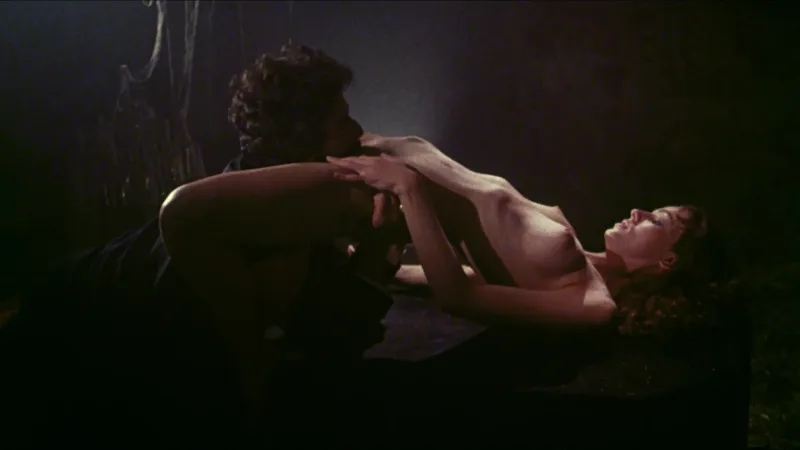
Rather than relying entirely upon suggestion, the film introduces hardcore sexual encounters directly into its gothic setting. Seduction, nudity, masturbation, incestuous roleplay, and acts of sexual domination become part of the broader landscape of vampiric corruption.
Not every sexual sequence advances the plot. Some are connected to Dracula's growing influence, while others exist principally to meet the expectations of the adult-film marketplace.
The distinction matters.
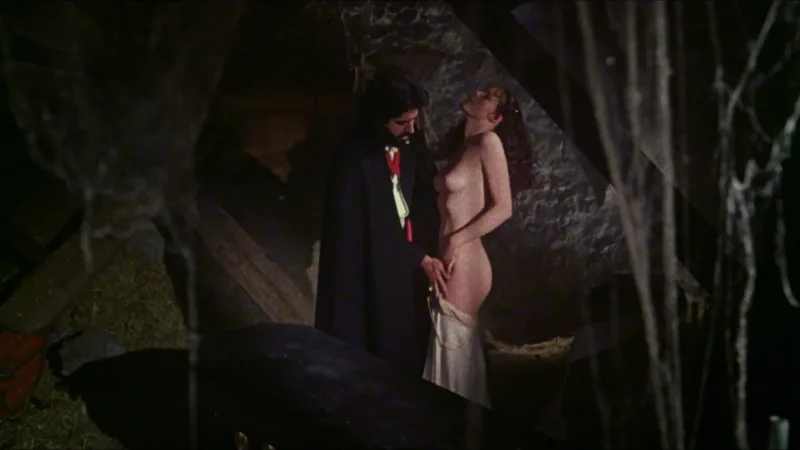
When the sexual material grows naturally from the vampire narrative, it can intensify the atmosphere of danger and forbidden desire. When it appears abruptly, with little relationship to character or consequence, the story loses momentum.
The film is also interested in the uncomfortable relationship between sex and violence. Several encounters are framed around coercion or supernatural domination rather than consent, making the vampire's sexual appetite an extension of his predatory nature.
These scenes are important to understanding the film's exploitation-era sensibilities, even when their treatment is difficult to defend.
The result is neither a consistently erotic feature nor a conventional horror picture. It is a film in which sexuality alternates between narrative metaphor, commercial spectacle, and deliberately transgressive provocation.
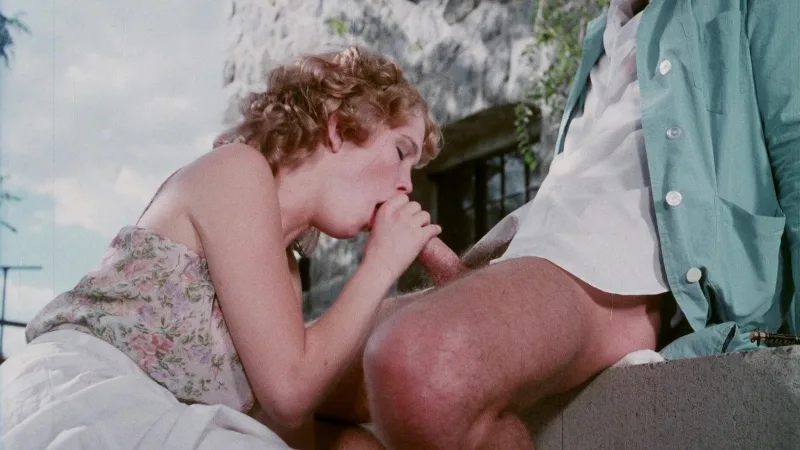
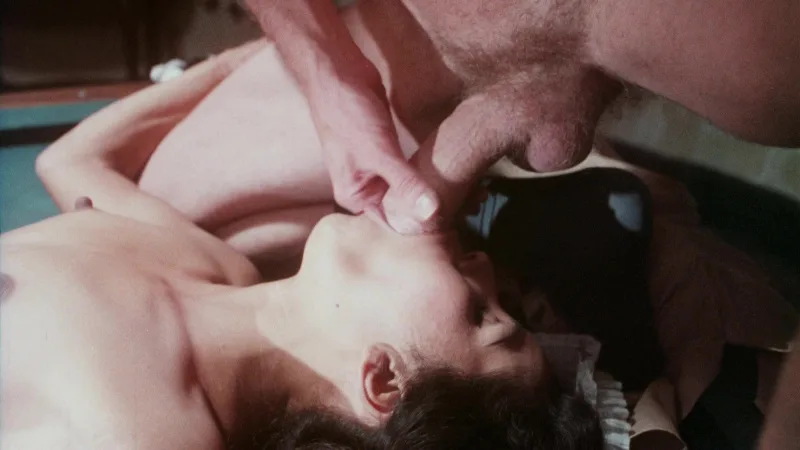
Jamie Gillis: a surprisingly convincing Count Dracula
Jamie Gillis is one of the film's strongest assets.
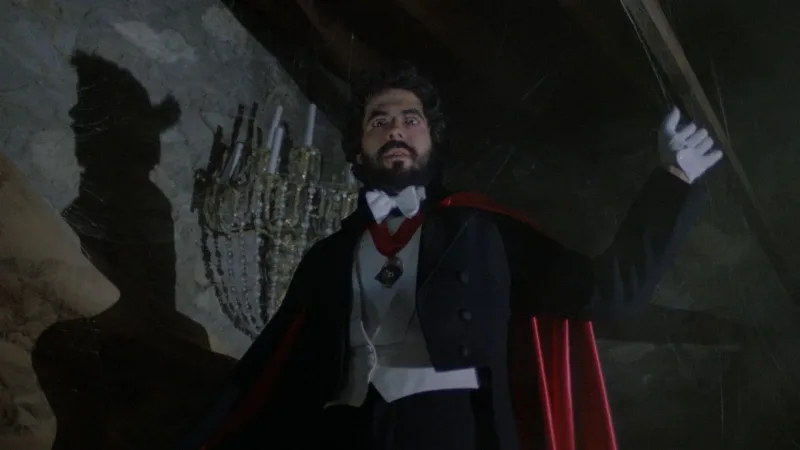
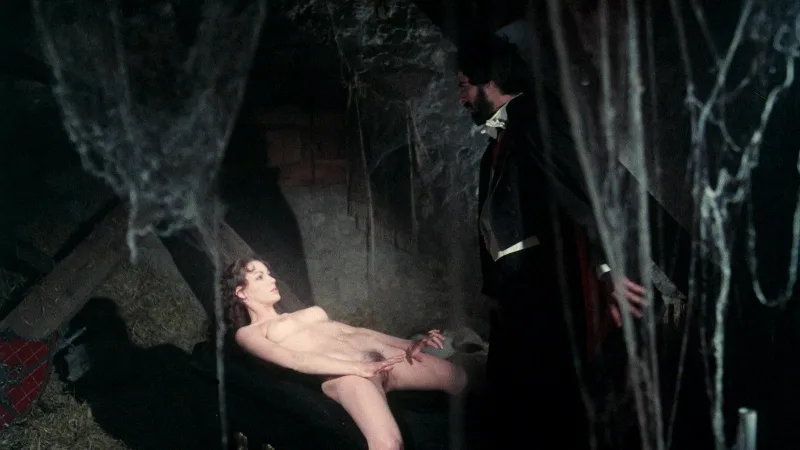
Sporting a beard and adopting an aristocratic manner inspired by Bela Lugosi, Gillis presents Dracula as a figure of sexual confidence and quiet menace.
He understands the theatricality required for the character. His deliberate speech, commanding presence, and controlled physical movements help establish the Count as more than an excuse for the film's explicit sequences.
Rather than treating Dracula as a disposable parody, Gillis appears genuinely invested in the role.
His performance anchors a production that frequently threatens to collapse under the weight of its competing ideas.
It also demonstrates something sometimes overlooked about the Golden Age's leading performers; many possessed considerable screen presence and were capable of delivering character-driven performances when the material allowed it.
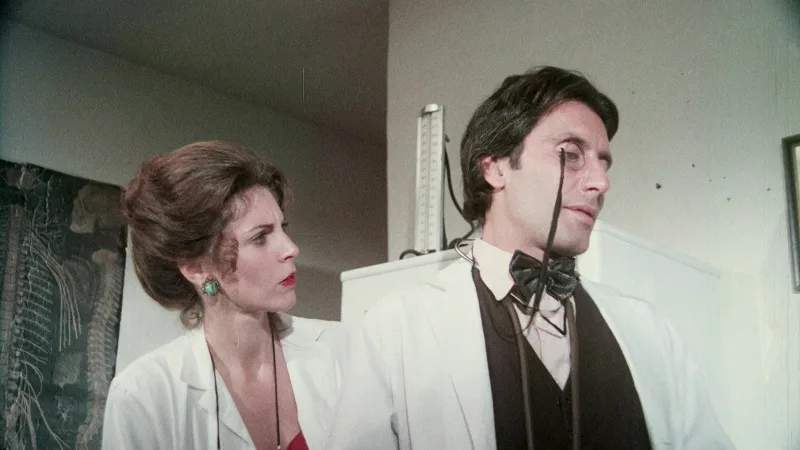
Kay Parker as Dr. Sybil Seward
For admirers of Kay Parker, Dracula Sucks offers an intriguing but frustrating early-career appearance.
Parker plays Dr. Sybil Seward, a physician associated with the sanitarium and generally identified as Arthur Seward's sister.
Her performance is understated compared with the film's more theatrical characters. She projects composure and maturity, bringing a sense of professional authority to an environment increasingly consumed by irrationality.
Unfortunately, Marshak does relatively little to develop Sybil as an independent character.
One of the film's more controversial sequences involves Sybil and Arthur in a sexual encounter that introduces an incestuous theme. According to William Margold's production commentary, as reported by specialist reviewers, the scene was improvised rather than part of the original scripted narrative.
Its inclusion illustrates the film's willingness to cross sexual taboos, sometimes with little concern for character continuity or dramatic justification.
Parker's participation is also significant in retrospect because she would later become closely associated with the adult film Taboo (1980), another production built around forbidden family relationships.
Nevertheless, Dracula Sucks should not be understood simply as a precursor to Taboo. Parker's role is comparatively small, and the film does not fully utilize her acting capabilities.
Her presence is memorable, but the screenplay offers her too little opportunity to influence the principal story.
Annette Haven, John Leslie, and the supporting cast
Annette Haven brings a distinctive restraint to Mina.
While Dracula is defined by obsession and supernatural authority, Haven's Mina represents the emotional center of the narrative. Her performance offers a necessary contrast to the surrounding absurdity.
John Leslie's Dr. Arthur Seward is considerably more theatrical, playing the physician as an authority figure whose ability to control the situation progressively diminishes.
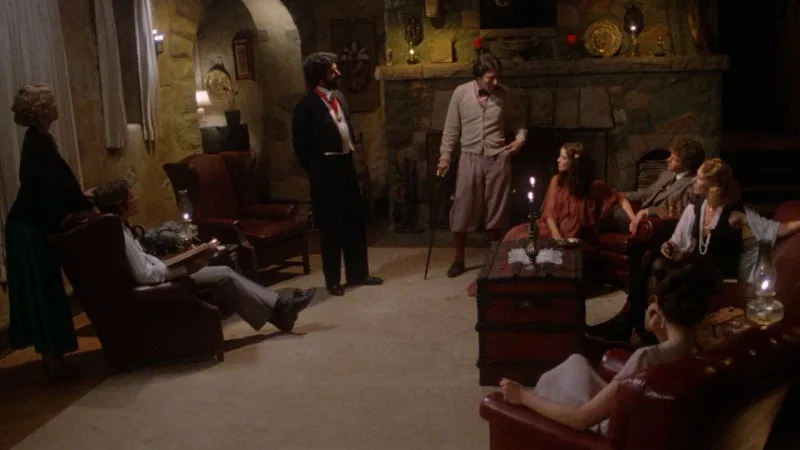
Reggie Nalder contributes an especially unusual interpretation of Van Helsing. His familiar sinister features might suggest an intimidating vampire hunter, yet the character is frequently written as ineffective or absurd.
Richard Bulik's Renfield is another notable performance, strongly recalling Dwight Frye's interpretation in the 1931 film.
The supporting cast includes John Holmes as Dr. John Stoker, Serena as Lucy Webster, Paul Thomas as Jonathan Harker, Mike Ranger as Dr. Peter Bradley, and Seka as Nurse Betty Lawson.
Holmes's role becomes the vehicle for some of the film's more grotesque combinations of sexuality and vampiric violence. The character's sexual encounter with a vampiric servant becomes an example of how Marshak transforms an ordinarily erotic situation into a grotesque horror joke.
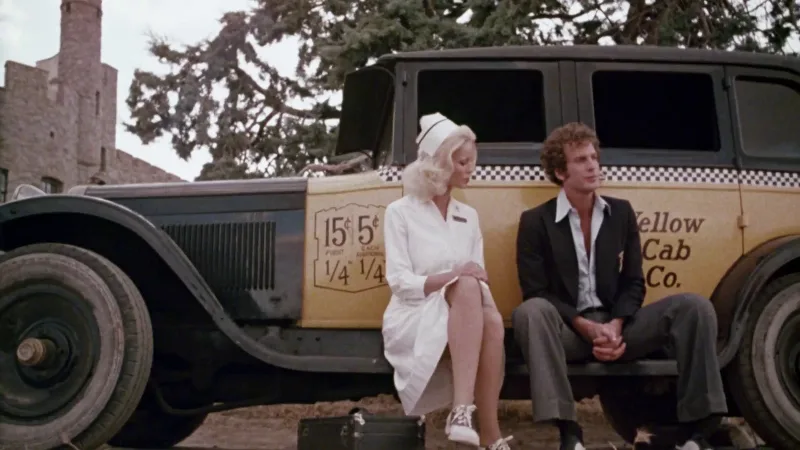
Seka's participation has particular historical interest; Dracula Sucks is generally identified as her feature-film debut.
Behind the scenes: ambition, improvisation, and competing visions
The production history is nearly as fascinating as the film itself.
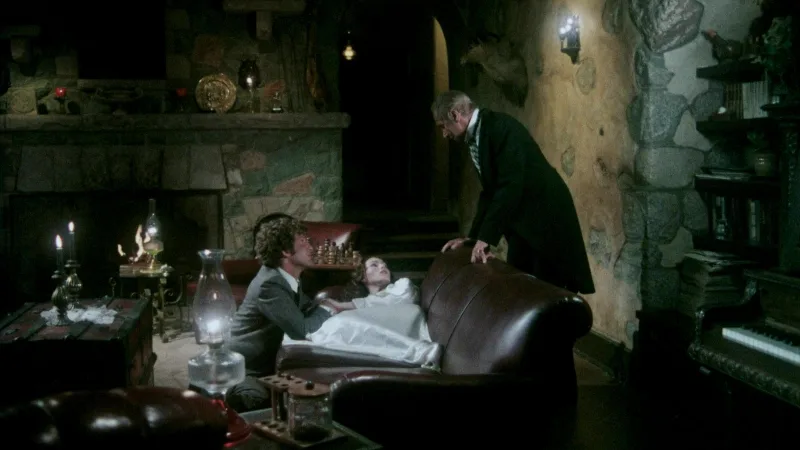
Dracula Sucks was photographed on 35mm film, using a castle-like location in the California desert. The setting allowed Marshak to construct a gothic atmosphere unusual for an American hardcore feature of its period.
Its visual ambition is evident in the interiors, costumes, dramatic lighting, and attempts to recreate the iconography of classic Hollywood horror.
But the production faced difficulties.
Accounts associated with the film's later restorations describe a shoot complicated by improvisation, shifting creative decisions, and additional sexual material produced under William Margold's involvement.
Some sequences appear to have been conceived primarily for the adult market rather than the main narrative.
This contributed to the editorial problems that would define the film's release history.
The available footage could support markedly different films depending upon whether the editor prioritized traditional horror storytelling or prolonged sexual encounters.
Consequently, Dracula Sucks would eventually exist in several versions, each reflecting a different interpretation of what audiences were supposed to receive.
Two films hiding inside one production
Perhaps the most unusual element of Dracula Sucks is its complicated history of alternative edits.
Dracula Sucks
Long cut 95 minutes
More complete horror narrative, explicit sexual material, vampire attacks and fatal conclusion
Lust at First Bite
75 minutes
Restructured narrative, different and sometimes more explicit sexual footage, substantially reduced horror, alternate ending
R-rated / softcore versions
Varies
Sexual imagery reduced or removed for less explicit distribution
Reported early longer edit
108–110 minutes
Frequently mentioned but not reliably authenticated
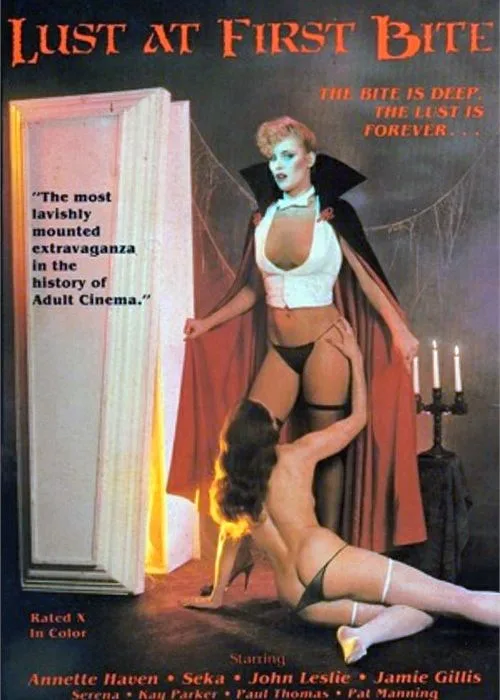
The longer version attempts to maintain the recognizable structure of Stoker's story.
Lust at First Bite, however, prioritizes the sexual material, removes substantial portions of the horror narrative, and creates a more favorable ending for Dracula.
This makes the alternate version something more interesting than an ordinary shortened release.
It is effectively a reinterpretation of the same footage.
For film historians, the comparison offers a rare opportunity to observe how editing can transform character motivation, genre, and meaning without an entirely new production.
Does the film succeed as cinema?
The greatest strength of Dracula Sucks is its ambition.
The filmmakers could have produced a cheaply assembled parody with familiar costumes and a succession of unrelated sexual encounters.
Instead, they attempted to create a recognizable Dracula film supported by period imagery, established adult performers, and comparatively elaborate production design.
At times, the results are genuinely impressive.
The atmospheric interiors, Gillis's committed performance, and the recognizable elements of classic vampire mythology give the film a stronger foundation than its provocative title might suggest.
But these strengths are undermined by inconsistent editing and uncertain tone.
The comedy is uneven, the story sometimes disappears beneath unrelated encounters, and certain secondary characters are introduced without meaningful development.
The portrayal of Jarvis, the sanitarium's Black servant, also relies on an offensive racial caricature that has aged especially poorly.
Another weakness is the treatment of sexual violence. While sexual aggression is inherent to many vampire narratives, the film sometimes appears uncertain whether its predatory scenes should be disturbing, humorous, or titillating.
The resulting tonal confusion makes the work compelling as an artifact of exploitation cinema, even when it is less successful as entertainment.
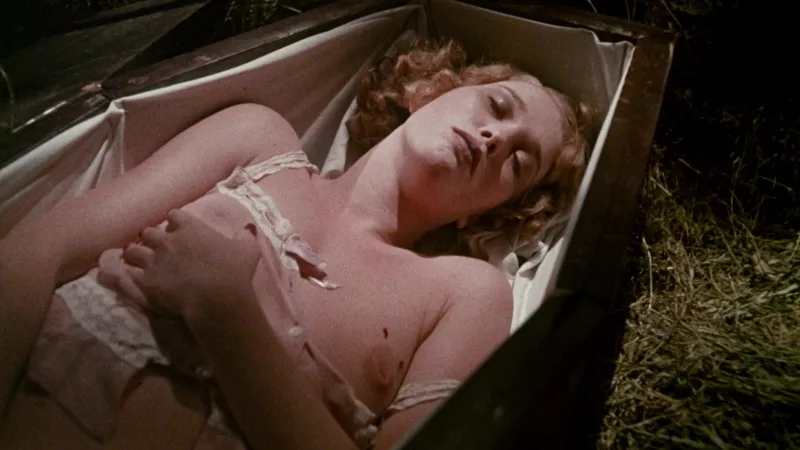
Preservation and the film's second life
Although Dracula Sucks was never destined to become a mainstream classic, it gradually acquired an audience among collectors of cult horror and Golden Age adult cinema.
Its complicated editing history also created interest among film preservationists.
Vinegar Syndrome released a DVD edition in 2014 featuring the longer cut and the alternative Lust at First Bite version.
A Blu-ray release followed in 2018, while a 2022 UHD/Blu-ray edition presented the feature using a new 4K scan of the original camera negative.
These restorations brought renewed attention to the film's production values and unusual place within adult-film history.
The availability of both major versions also allows modern viewers to appreciate the importance of editing in shaping the identity of a movie.
What was once an obscure exploitation title now serves as a useful historical example of a period when adult filmmakers were attempting to combine explicit sexuality with conventional cinematic genres.
Cast
- Jamie GillisCount Dracula
- Annette HavenMina
- Kay ParkerDr. Sybil Seward
- SerenaLucy Webster
- John HolmesDr. John Stoker
- SekaNurse Betty Lawson
- John LeslieDr. Arthur Seward
- Reggie NalderDr. Van Helsing
Full cast
- Mike RangerDr. Peter Bradley
- Paul ThomasJonathan Harker
- Richard BulikRichard Renfield
- Pat ManningIrene Renfield
- David Lee BynumJarvis
- William MargoldHenry